Cookes Winter Pool Care Guide for the Sunraysia Region
Practical winter pool care advice to help protect your water, equipment and pool investment through the cooler months.
When the Sunraysia weather cools down, it is tempting to forget about the pool until spring. After all, if no one is swimming, why keep spending time on it?
But this is where many pool owners get caught.
Cutting back in winter is sensible. Stopping completely can cost more later.
Even when your pool is not being used, the water is still sitting against your pool surface, lights, seals, fittings, pipework and equipment every day. If that water stays unbalanced for weeks or months, it can slowly contribute to staining, scale, corrosion, algae growth and equipment wear.
In Mildura and across the Sunraysia region, winter can certainly bring frosty mornings. Average overnight temperatures sit around 4–5°C through the cooler months, with occasional recorded lows around -3°C to -4°C. However, this is generally short-lived overnight cold rather than sustained freezing conditions.
That means local winter pool care is usually less about full cold-climate winterisation and more about keeping your water balanced, circulated, clean and protected.
In winter, your pool does not need more maintenance — it needs smarter maintenance.
Winter Pool Care Is About Protecting Your Investment
A pool is a major investment in your home, lifestyle and family time. Looking after it through winter helps protect that investment.
Many pool owners think they are saving money by stopping pool care completely during the cooler months. The pool is not being used as often, the water is colder, and summer feels a long way away.
The problem is that this can become a false economy.
If the pool is left unchecked for months, you may be dealing with green water, scale, staining, clogged filters, worn equipment or urgent service work when the warmer weather returns.
That is the key message for winter:
Do less, but don’t do nothing.
A small amount of consistent winter care can help you:
- Protect your pool surface
- Reduce algae risk
- Help equipment last longer
- Avoid heavy spring clean-ups
- Catch small equipment issues early
- Reduce the chance of urgent repairs when the weather warms up
- Keep your pool easier to bring back into full use
Winter care is not about spending more. It is about protecting what you have already invested in.
Balanced Water Is Protective Water
This is one of the most important things to understand about winter pool care:
Balanced water is protective water.
Pool water is constantly affected by pH, total alkalinity, calcium hardness, temperature, sanitiser levels and other factors. When those levels move too far out of balance, the water can become aggressive or scale-forming.
When water becomes aggressive, it can contribute to etching, corrosion, staining and premature wear, especially on vulnerable pool surfaces, metals and equipment components.
When water becomes scale-forming, it can leave calcium deposits on surfaces, heaters, chlorinator cells, filters and pipework.
In simple terms, balanced water is more stable and less likely to damage the surfaces and equipment it touches every day.
That is why clear water does not always mean healthy water. A pool can look fine and still be out of balance.
As a general guide, your pool’s pH should usually sit between 7.2 and 7.6. Total alkalinity is also important because it helps stabilise pH. If alkalinity is too low, pH can swing up and down more easily, making the water harder to manage.
The best place to start is with a professional water test.
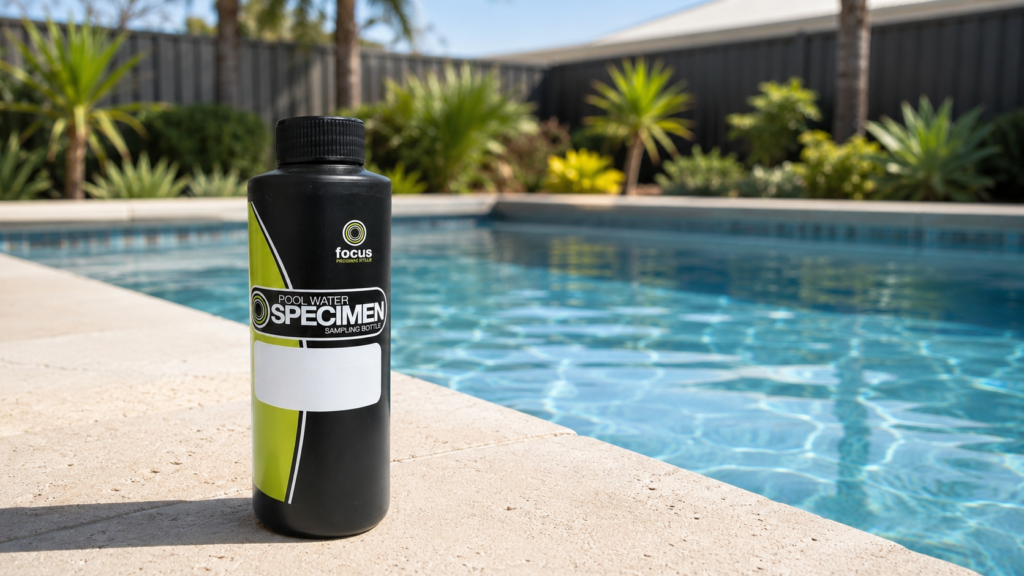
Bring a water sample into Cookes Pools & Spas for a FREE professional water test.
We can check your water balance and help you understand exactly what your pool needs through winter.
Why Skipping Winter Care Can Cost More Later
Stopping pool care completely can create problems that build slowly.
Over winter, your pool can still be affected by:
- Unbalanced water
- Leaves, dust and organic debris
- Reduced circulation
- Low sanitiser levels
- Phosphate build-up
- Filter pressure issues
- Scale or calcium deposits
- Algae beginning to form before spring
- Equipment issues going unnoticed
The frustrating part is that winter problems often stay hidden until the weather warms up. Then algae grows faster, equipment demand increases, and everyone starts trying to book pool service at the same time.
A neglected pool can look like a saving in winter and turn into a bigger bill in spring.
That is why the goal is not to over-service your pool during the cooler months. The goal is to keep the water stable, the system moving and the equipment checked, so small issues do not become expensive problems.
Step 1: Balance the Water Before Winter Sets In
One of the first things to do before winter is balance the water properly.
This includes checking:
- pH
- Total alkalinity
- Calcium hardness
- Sanitiser level
- Stabiliser
- Phosphates
- Salt level, if you have a saltwater pool
Balanced water helps protect your pool surface, equipment, fittings and seals. It also makes the rest of your winter care easier.
If your pH, alkalinity or calcium hardness is out of range, your pool water may become more aggressive or more likely to form scale. Either can cause long-term issues if left unchecked.
Rather than guessing, bring a water sample into Cookes and we will test it for you.
Step 2: Clean the Pool Thoroughly
Before you reduce your regular routine, give the pool a proper clean.
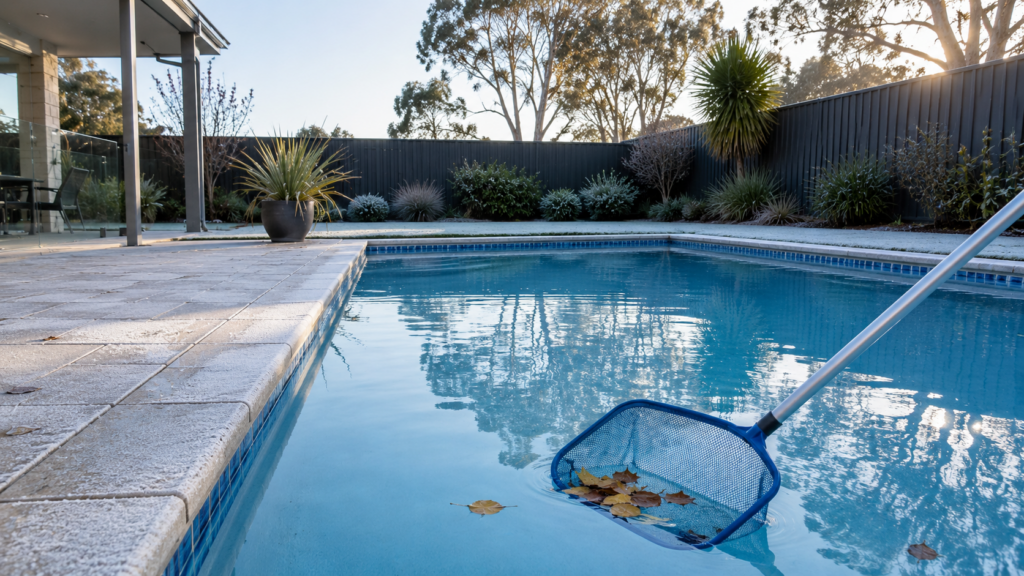
Brush the walls, steps, corners and floor. Vacuum the pool thoroughly or run your automatic cleaner. Remove leaves, dirt and debris from the water, skimmer basket and pump lint basket.
This matters because algae thrives in unclean water. Leaves and organic debris do not just look messy. As they break down, they can affect water quality, increase sanitiser demand and contribute to algae problems.
A clean pool is easier to keep balanced through winter.
Helpful options include:
- Leaf rakes and skimmer nets
- Pool brushes
- Vacuum equipment
- Robotic cleaners, including Maytronics Dolphin options
- Professional pool servicing from Cookes
If your pool has already started turning cloudy or green, bring a water sample and a photo into Cookes so the team can help you work out the best recovery plan.
Step 3: Clean the Filter
Your filter does a lot of work through summer. Winter is a great time to clean it properly and check whether it is still performing well.
This is important because grease, oils and other deposits can harden through winter, making the filter harder to clean later and reducing its overall efficiency.
For media filters, this may include backwashing and using a suitable filter cleaner. For cartridge filters, it may mean removing the cartridge and rinsing it thoroughly. If the cartridge is worn, damaged or difficult to clean, it may need replacing.
Keep an eye on:
- Filter pressure
- Weak water flow
- Cloudy water
- Noisy pump operation
- Poor suction
- Leaks around lids or unions
- Worn O-rings or seals
A clean, healthy filter helps your winter water stay clearer and reduces strain on the rest of the system.
Step 4: Use a Winter Shock Treatment When Needed
A suitable shock treatment can help reset the water before winter or support water clarity during the cooler months.
After adding the right treatment for your pool, run the pump and filter for several hours so it can circulate properly through the pool.
The right product and timing will depend on your pool type, current water test and sanitiser system. That is why it is best to test your water first.
Cookes can recommend the right winter water treatment based on your pool’s needs.
Step 5: Protect Against Algae
Cooler water slows algae growth, but it does not remove the risk completely.
Algae can still develop when water is left unbalanced, poorly circulated or full of organic debris. Once spring arrives and the water warms up, a small winter problem can quickly become a green pool.
Prevention is much easier than recovery.
A good winter algae prevention plan may include:
- Keeping the water balanced
- Maintaining appropriate sanitiser levels
- Removing leaves and debris
- Checking phosphate levels
- Using the right winter algae preventative if needed
- Keeping filtration running on a reduced but consistent schedule
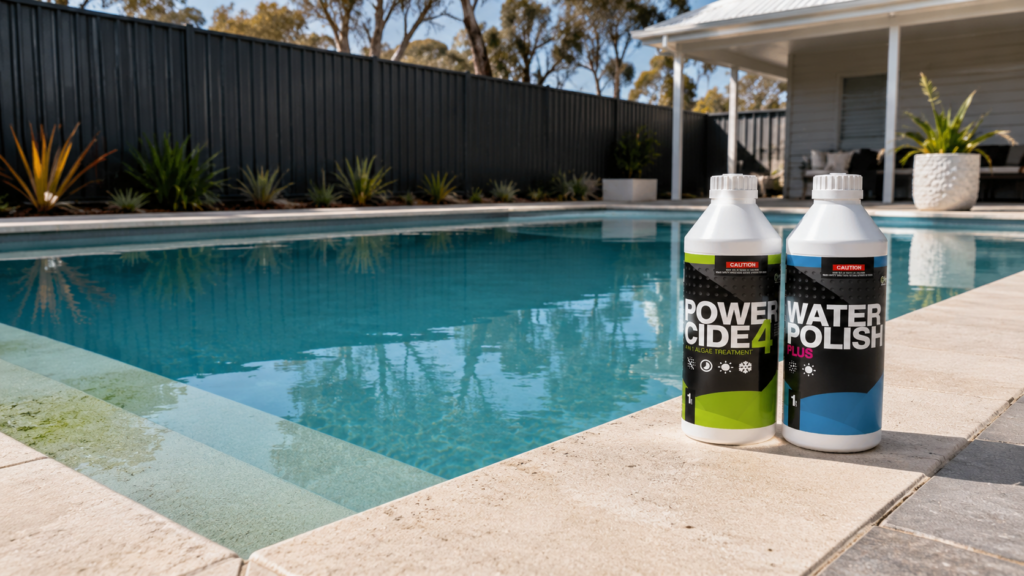
For many pools, Cookes may recommend a monthly winter algae prevention routine such as 200ml of Powercide 4 and 200ml of Water Polish once a month, depending on your pool size, water test and current condition.
Powercide 4 can help with algae prevention and winterising, while Water Polish can help improve clarity by assisting fine particles to be collected by the filter.
Before adding any product, bring a water sample into Cookes so we can confirm what your pool actually needs.
Step 6: Check Chlorine Levels Through Winter
Even in winter, your pool still needs an appropriate sanitiser level.
As a general guide, aim to keep free available chlorine around 2–3 ppm through winter, unless Cookes advises otherwise for your specific pool or system.
If you use a salt chlorinator, you may need to reduce the output through the cooler months because the pool has lower sanitiser demand than it does in summer.
This is especially important if you use a pool blanket. Pool blankets can trap sanitiser, and if the chlorinator output is left too high, chlorine levels may rise above where they need to be. Over time, high chlorine levels can contribute to unnecessary wear on pool equipment and covers if not monitored.
If you are using a salt chlorinator and a pool blanket, ask Cookes what winter setting is right for your pool.
Step 7: Reduce Filtration, But Keep Water Moving
In Sunraysia, most pools do not need to run the same way in winter as they do in summer. Cooler weather, less swimming and reduced sunlight usually mean your pool can run on a lighter schedule.
But lighter does not mean off.
Water still needs to circulate so filtration and water treatment can do their job. If the system is left off for long periods, debris can settle, water can stagnate, and algae can gain a foothold.
As a general guide, many pools can run their filter for around three to four hours per day through winter. However, the right run time depends on your pool size, equipment, cover use, debris load and water test results.
If you use a timer, adjust it to suit your winter routine. Running the filter during off-peak periods may also help reduce running costs, depending on your energy plan.
Not sure what your winter settings should be? Ask the Cookes team when you bring in your water sample.
Step 8: Use a Pool Cover to Make Winter Care Easier
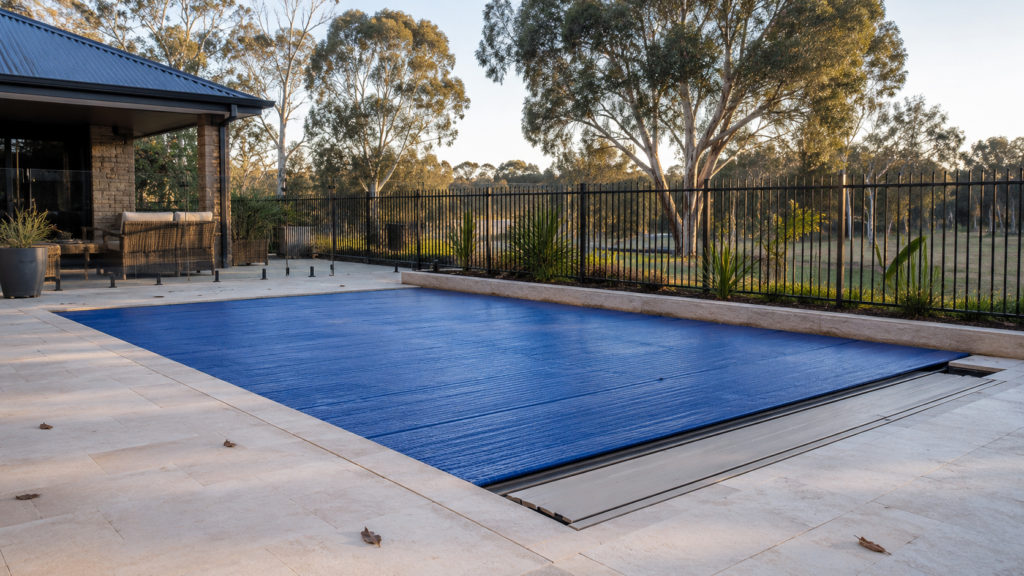
A good pool cover can make a big difference during the cooler months.
A cover helps:
- Reduce leaves, dust and debris entering the pool
- Reduce evaporation
- Help maintain more stable water conditions
- Reduce heat loss if the pool is heated
- Lower the cleaning load
- Make spring start-up easier
This is especially useful in Sunraysia, where dry conditions, wind, dust and evaporation can all affect pool care.
If you already have a pool cover, winter is a good time to inspect it. Check for tears, worn edges, damaged straps, roller issues or areas where debris is collecting. If your cover is becoming difficult to use, it may be time to look at replacement options.
Cookes can help with Daisy Pool Covers and rollers to suit your pool.
Step 9: Do a Winter Equipment Health Check
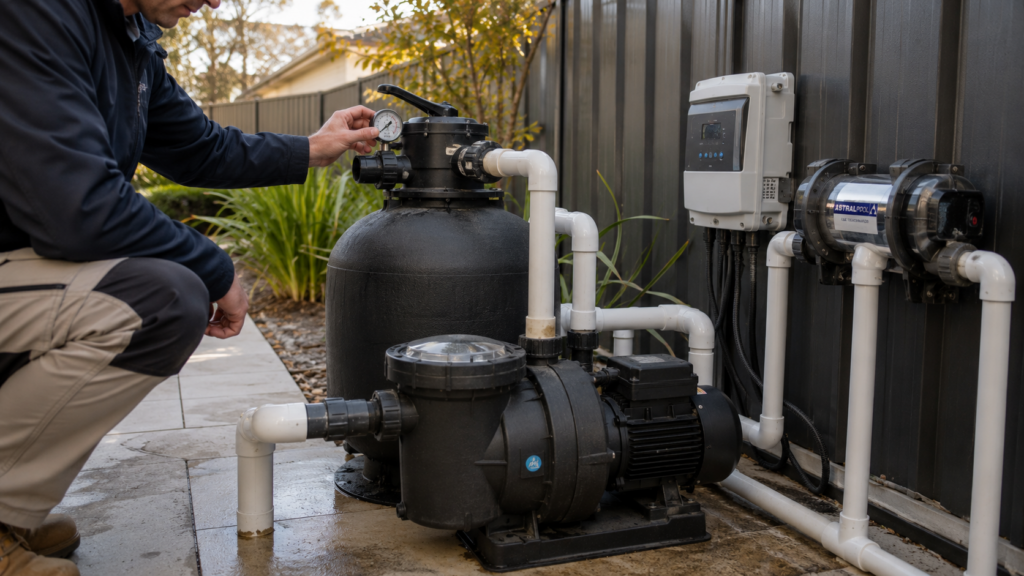
Winter is one of the best times to check your pool equipment because service departments are generally quieter than they are in spring and summer.
By the time the weather warms up, everyone wants their pool ready at once. Booking repairs, upgrades or inspections during the cooler months can help you avoid the seasonal rush.
Check the following:
Pump
Listen for unusual noise, check for leaks, and look for reduced water flow.
Filter
Check pressure, cartridges, media, lids, clamps, O-rings and overall condition.
Salt chlorinator
Look for calcium build-up on the cell, low output, warning lights or signs the cell is ageing.
Cleaner
Check tracks, brushes, cables, suction parts, hoses and general performance.
Heater or heat pump
Winter is a smart time to service heating equipment or consider an upgrade if you want to extend your swimming season.
Pool lights
Check dim, flickering or failed lights before summer entertaining starts.
Pool cover and roller
Look for tears, worn straps, roller issues or a cover that has become hard to manage.
Valves and pipework
Check for leaks, stiff handles, cracked fittings or signs of wear.
Cookes can help check your equipment and recommend repairs, replacements or upgrades where needed.
Step 10: Keep Up a Simple Winter Maintenance Schedule
Once your pool is prepared for winter, keep up a simple maintenance schedule.
You do not need to treat winter like peak swimming season, but you should still check the pool regularly.
Once a week
- Do a quick visual inspection
- Check the water level
- Empty the skimmer basket
- Empty the pump lint basket
- Check that the pump and equipment are working properly
- Look for leaks, unusual noises or warning lights
- Check chlorine and pH levels
- Remove obvious leaves or debris
- Check that the pool cover is sitting properly
Every 2–4 weeks
- Bring a water sample into Cookes for testing
- Check pH, alkalinity, calcium hardness and sanitiser levels
- Check phosphate levels if algae has been a problem
- Brush steps, corners and low-circulation areas
- Check filter pressure
- Inspect the chlorinator cell
- Adjust winter water treatment as needed
This simple routine helps keep your pool protected without overcomplicating winter maintenance.
Book Repairs and Upgrades Before the Spring Rush
Winter is a smart time to plan ahead.
If your pump struggled last summer, your filter is ageing, your chlorinator is unreliable, your cleaner is not doing the job, or your heating system needs attention, do not wait until the first hot weekend.
By then, service bookings are busier and parts may take longer to arrange.
Getting work done during the cooler months gives you more time, less pressure and a better chance of having your pool ready before everyone else starts thinking about swimming again.
Winter is also a good time to think about:
- Energy-efficient pump upgrades
- New filtration equipment
- Chlorinator replacement
- Robotic cleaner upgrades
- Pool heating
- Pool lighting
- Pool cover replacement
- Renovation planning
- Surface, coping or equipment improvements
A little planning now can make spring much easier.
What to Bring Into Cookes This Winter
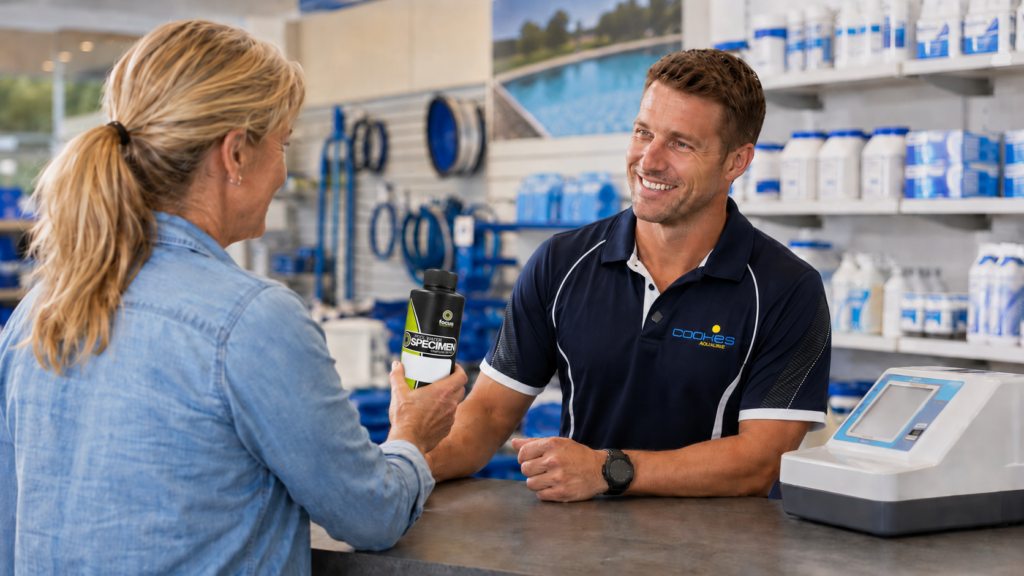
To make winter pool care easier, bring in:
- A fresh pool water sample
- A photo of your pool if you are dealing with algae, staining, cloudiness or scale
- A photo of your equipment setup if something is leaking, noisy or not working properly
- Any notes about recent issues, such as high water loss, poor suction, green patches or unusual equipment sounds
This helps the Cookes team give you more accurate advice and recommend the right next step for your pool.
Quick Winter Pool Care Checklist
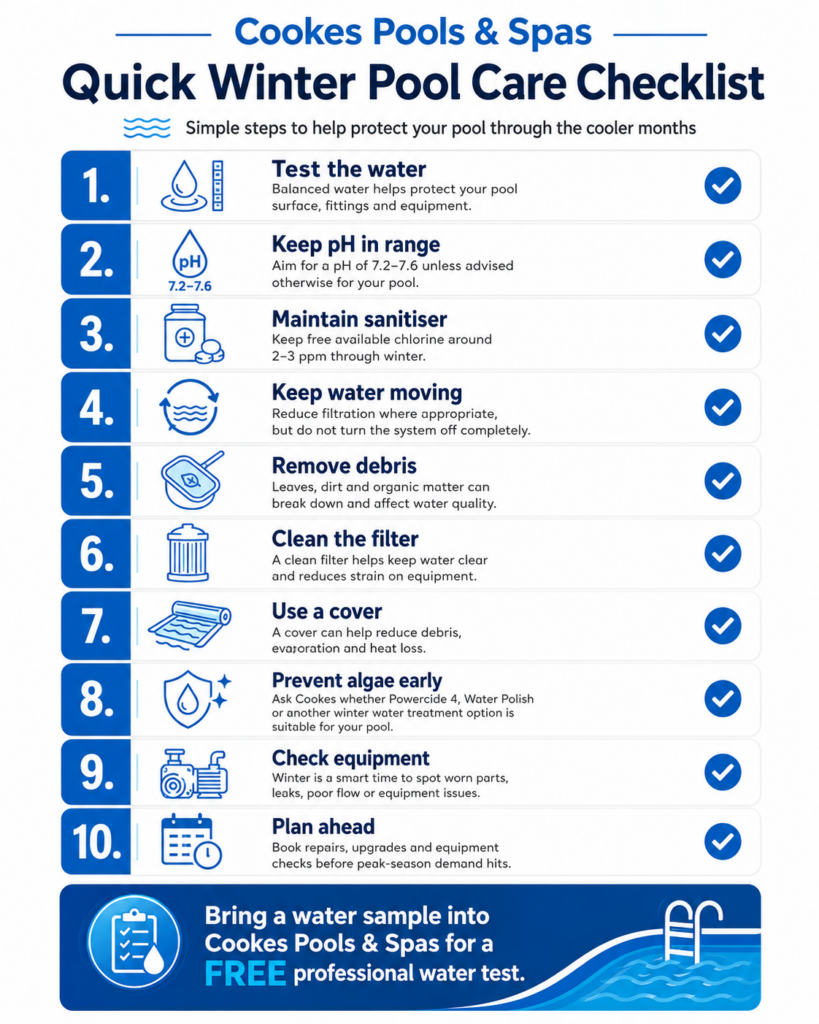
Test the water
Balanced water helps protect your pool surface, fittings and equipment.
Keep pH in range
Aim for a pH of 7.2–7.6 unless advised otherwise for your pool.
Maintain sanitiser
Keep free available chlorine around 2–3 ppm through winter.
Keep water moving
Reduce filtration where appropriate, but do not turn the system off completely.
Remove debris
Leaves, dirt and organic matter can break down and affect water quality.
Clean the filter
A clean filter helps keep water clear and reduces strain on equipment.
Use a cover
A cover can help reduce debris, evaporation and heat loss.
Prevent algae early
Ask Cookes whether Powercide 4, Water Polish or another winter water treatment option is suitable for your pool.
Check equipment
Winter is a smart time to spot worn parts, leaks, poor flow or equipment issues.
Plan ahead
Book repairs, upgrades and equipment checks before peak-season demand hits.
Final Word: Do Less, But Don’t Do Nothing
Your pool does not need the same level of care in winter as it does in summer. But it still needs consistent care.
Balanced water helps protect your pool surface, fittings, lights, seals and equipment. Basic cleaning reduces debris and algae risk. Reduced filtration keeps water moving without running the system harder than necessary. Equipment checks help you catch small issues before they become expensive problems.
Most importantly, winter pool care helps protect the money you have already invested.
A neglected pool can look like a saving in winter and turn into a bigger bill in spring.
Bring a water sample into Cookes Pools & Spas for a FREE professional water test. Our Mildura team will help you understand exactly what your pool needs through the cooler months, so you can protect your investment and be ready when Sunraysia warms up again.
Need help preparing your pool for winter? Book a service or bring a water sample into Cookes for expert advice.
Contact us today to keep your pool or spa in perfect condition year-round.